admin
Introduction
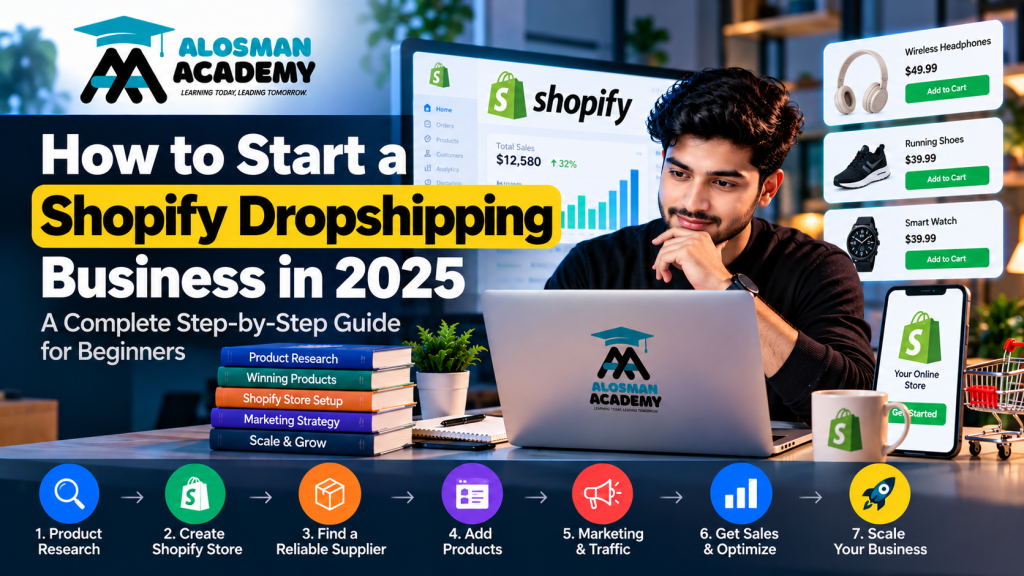
Starting an online business has become more accessible than ever, and Shopify dropshipping is one model that attracts many new entrepreneurs.
In a dropshipping business, you can sell products online without keeping traditional inventory in your own warehouse. When a customer places an order, the supplier can fulfill and ship the product directly to the customer.
However, creating a Shopify store alone does not guarantee success. You need to choose the right products, work with reliable suppliers, create a trustworthy store, and develop an effective marketing strategy.
This guide explains how beginners can build a Shopify dropshipping business step by step.
What Is Shopify Dropshipping?
Shopify is an e-commerce platform that allows businesses to create and manage online stores.
Dropshipping is a fulfillment model where the seller does not necessarily keep products in their own inventory. Instead, products are sourced from suppliers who fulfill customer orders.
A typical process looks like this:
Customer → Shopify Store → Order → Supplier → Customer
The store owner focuses on marketing, customer experience, pricing, and business management.
1. Choose a Profitable Niche
Before building your store, choose a specific niche.
Examples include:
- Home & Kitchen
- Beauty & Personal Care
- Fitness
- Pet Products
- Electronics Accessories
- Fashion Accessories
- Office & Productivity
- Travel Accessories
A focused niche can make it easier to understand your customers and create targeted marketing campaigns.
2. Research Products Carefully
Product research is one of the most important parts of a successful dropshipping business.
Look for products that:
- Solve a real problem
- Have clear customer demand
- Are easy to demonstrate in videos
- Have reasonable shipping costs
- Offer enough profit margin
- Are not overly saturated
- Have potential for repeat or complementary purchases
Don’t choose a product simply because it is trending on social media. Analyze the competition and calculate your expected costs first.
3. Find a Reliable Supplier
Your supplier directly affects your customer experience.
Before working with a supplier, check:
- Product quality
- Shipping time
- Processing time
- Supplier communication
- Product reviews
- Return/refund procedures
- Packaging
- Order tracking
Ordering a sample before launching can help you evaluate product quality and shipping.
4. Build Your Shopify Store
Your Shopify store should look professional and trustworthy.
Important pages include:
- Homepage
- Product pages
- About Us
- Contact Us
- FAQ
- Shipping Policy
- Return & Refund Policy
- Privacy Policy
- Terms & Conditions
Your product pages should contain high-quality images, clear descriptions, benefits, specifications, pricing, and shipping information.
5. Optimize Your Product Pages
A good product page should answer the customer’s most important questions.
Include:
Clear Product Title
Make the product name easy to understand.
Strong Product Images
Show the product from multiple useful angles.
Benefit-Focused Description
Explain how the product helps the customer instead of simply listing features.
Clear Call to Action
Make it obvious how customers can purchase the product.
Trust Elements
Where appropriate, include reviews, guarantees, secure checkout information, and transparent shipping details.
6. Choose Your Marketing Strategy
A Shopify store needs traffic.
You can use several marketing channels:
Facebook & Instagram Ads
Useful for visual products and audience-based targeting.
TikTok Marketing
Short-form videos can help demonstrate products and reach new audiences.
Google Ads
Useful when customers are actively searching for products.
SEO
Optimizing your store and content can help attract organic traffic from search engines.
Email Marketing
Email campaigns can help recover abandoned carts and build relationships with customers.
7. Test Before Scaling
One of the biggest mistakes beginners make is spending too much money before understanding what works.
Instead:
Test → Measure → Optimize → Scale
Track metrics such as:
- Click-through rate
- Cost per click
- Conversion rate
- Customer acquisition cost
- Average order value
- Profit margin
- Return on ad spend
Use the data to determine which products and campaigns deserve more investment.
8. Provide Excellent Customer Service
Dropshipping does not remove your responsibility to the customer.
You should provide:
- Fast communication
- Accurate tracking information
- Clear shipping expectations
- Professional responses
- Transparent refund policies
A positive customer experience can lead to better reviews, repeat purchases, and stronger brand loyalty.
9. Build a Brand Instead of Just Selling Products
Long-term success is easier when customers remember your business.
Consider developing:
- A recognizable brand name
- Professional logo
- Consistent visual identity
- Branded packaging where possible
- Helpful content
- Social media presence
- Customer-focused communication
The goal should be to build a real e-commerce brand, not simply a temporary product store.
Common Shopify Dropshipping Mistakes
Beginners should avoid:
- Choosing products without proper research.
- Using unreliable suppliers.
- Ignoring shipping times.
- Creating low-quality product pages.
- Copying competitors completely.
- Spending heavily on ads without testing.
- Ignoring customer support.
- Failing to calculate the complete cost of each order.
Frequently Asked Questions
Can beginners start Shopify dropshipping?
Yes. Beginners can start, but they should learn the basics of product research, store management, marketing, supplier management, and customer service.
Do I need to keep inventory?
Traditional dropshipping generally allows you to operate without holding inventory yourself, although the exact fulfillment arrangement depends on your supplier and business model.
Is Shopify dropshipping profitable?
It can be profitable, but there is no guaranteed income. Profit depends on product selection, supplier costs, marketing performance, pricing, customer acquisition costs, and operating expenses.
How can I get my first customers?
You can test organic content, social media marketing, paid advertising, SEO, influencer marketing, and other customer acquisition strategies that fit your target audience and budget.
Conclusion
A successful Shopify dropshipping business requires much more than uploading products to a website.
You need a good product, reliable supplier, professional store, strong marketing strategy, accurate financial calculations, and excellent customer service.
Start small, test your ideas, study your data, improve your store, and scale only when your business model demonstrates consistent potential.
AlOsman Academy helps learners develop practical skills in Shopify, e-commerce, dropshipping, digital marketing, and online business.

 admin