admin

Introduction
E-commerce has changed the way people buy and sell products. Today, entrepreneurs can start an online store and reach customers beyond their local market without opening a traditional physical shop.
However, starting an e-commerce business requires more than simply creating a website and adding products. You need the right product, a clear target audience, a reliable supplier, an effective marketing strategy, and a plan for managing customers and orders.
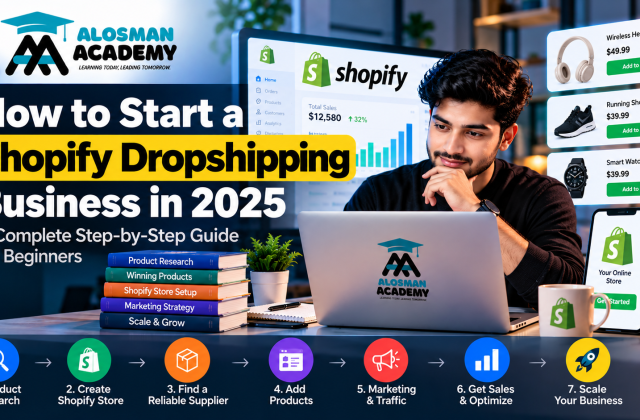
In this guide, we’ll explain how to start an e-commerce business step by step.
1. Choose the Right E-commerce Business Model
Before creating your store, decide how you want to sell products. Some common models include:
- Dropshipping — Products are shipped directly from a supplier to customers.
- Private Label — You sell products under your own brand.
- Wholesale — You purchase products in bulk and resell them.
- Print-on-Demand — Products are customized and produced after an order.
- Digital Products — You sell ebooks, courses, templates, software, or other digital products.
Each model has different requirements, costs, risks, and profit margins.
2. Find a Profitable Product
Product research is one of the most important parts of starting an online business.
When evaluating a product, consider:
- Customer demand
- Competition
- Selling price
- Product cost
- Shipping expenses
- Profit margin
- Product quality
- Potential for repeat purchases
Don’t choose a product simply because it is trending. Research whether there is sustainable customer demand and whether you can compete effectively.
3. Identify Your Target Audience
A successful store needs a clearly defined customer.
For example, instead of targeting everyone, you might focus on:
- Fitness enthusiasts
- Beauty customers
- Home & kitchen shoppers
- Pet owners
- Parents
- Technology enthusiasts
Understanding your audience helps you create better products, advertisements, website content, and offers.
4. Choose an E-commerce Platform
Your platform is where customers will browse products and place orders.
Popular options include Shopify, WooCommerce, and other e-commerce platforms.
When choosing a platform, consider:
- Ease of use
- Payment options
- Available apps and integrations
- Store customization
- Shipping features
- Marketing tools
- Scalability
Choose a platform that fits your business model and technical experience.
5. Build a Professional Online Store
Your website should make it easy for customers to understand your products and complete their purchases.
Important pages include:
- Homepage
- Product pages
- About Us
- Contact Us
- Shipping Policy
- Return & Refund Policy
- Privacy Policy
- Terms & Conditions
- FAQ
Your product pages should include clear images, useful descriptions, pricing, product benefits, specifications, and relevant information about shipping and returns.
6. Set Up Payments and Shipping
Customers need a convenient and trustworthy checkout experience.
Before launching, make sure you have properly configured:
- Payment methods
- Shipping rates
- Delivery locations
- Order confirmation emails
- Refund procedures
- Tax requirements applicable to your business
Always verify that your payment and shipping setup works correctly before running advertisements.
7. Create a Marketing Strategy
Building a store doesn’t automatically bring customers.
You need a marketing strategy to generate traffic and sales.
Some important channels include:
Social Media Marketing
Create useful content and promote your products through platforms such as Facebook, Instagram, TikTok, Pinterest, and LinkedIn where appropriate for your audience.
Paid Advertising
Paid advertising can help you reach specific audiences. However, start with controlled budgets and analyze performance before increasing spending.
SEO
Search engine optimization can help your product and informational pages appear in search results.
Focus on:
- Search intent
- Relevant keywords
- Helpful content
- Product page optimization
- Internal linking
- Technical SEO
- Page speed
Email Marketing
Building an email list allows you to communicate with potential and existing customers without depending entirely on paid advertising.
8. Track Your Business Performance
You can’t improve what you don’t measure.
Monitor metrics such as:
- Website traffic
- Conversion rate
- Cost per acquisition
- Average order value
- Customer acquisition cost
- Return on ad spend
- Profit margin
- Cart abandonment rate
These numbers can help you understand which parts of your business need improvement.
9. Improve and Scale
Once you begin generating consistent sales, look for ways to improve the business.
You might:
- Add related products
- Improve product pages
- Test different advertisements
- Optimize your checkout
- Negotiate better supplier pricing
- Build your own brand
- Expand to additional marketing channels
- Improve customer support
Scaling should be based on data rather than simply increasing spending.
Common Mistakes Beginners Should Avoid
New e-commerce entrepreneurs often make mistakes such as:
- Choosing products without proper research.
- Copying competitors without developing their own strategy.
- Spending heavily on advertising before testing products.
- Using poor-quality product images.
- Ignoring website speed and mobile users.
- Not calculating the complete cost of each sale.
- Making unrealistic profit expectations.
- Ignoring customer service.
Avoiding these mistakes can help create a stronger foundation for your online business.
Frequently Asked Questions
Is e-commerce suitable for beginners?
Yes, beginners can enter e-commerce, but learning product research, marketing, customer service, and financial management is important.
How much money do I need to start an e-commerce business?
The required budget depends on the business model, products, platform, marketing strategy, inventory, and other operating costs.
Can I start e-commerce without inventory?
Some business models, such as dropshipping and print-on-demand, can allow you to sell products without holding traditional inventory yourself.
How long does it take to make sales?
There is no guaranteed timeline. Results depend on factors such as product-market fit, pricing, website quality, marketing, competition, and customer demand.
Conclusion
Learning how to start an e-commerce business is the first step; building a sustainable business requires continuous research, testing, optimization, and customer focus.
Start with a clear business model, research your market carefully, build a trustworthy online store, develop a marketing strategy, and use data to make decisions. With consistent learning and improvement, you can build a stronger foundation for your e-commerce journey.
AlOsman Academy is focused on helping learners develop practical knowledge in e-commerce, digital marketing, online business, and other digital skills.

 admin